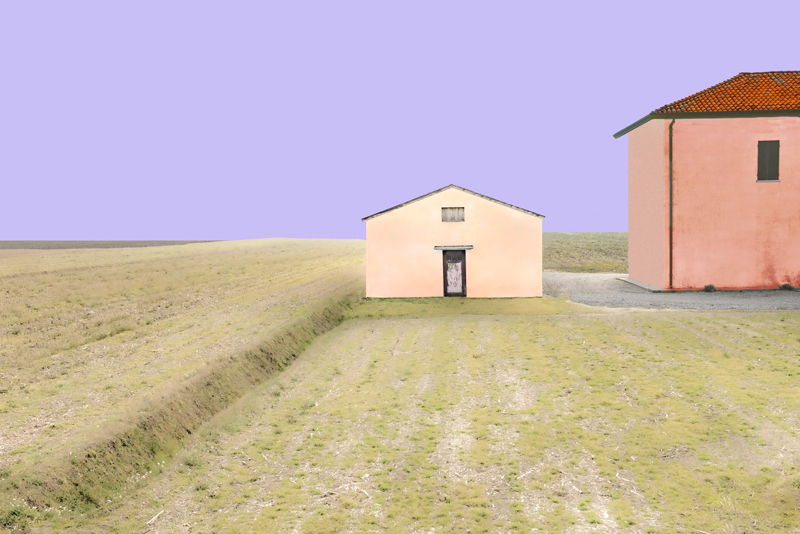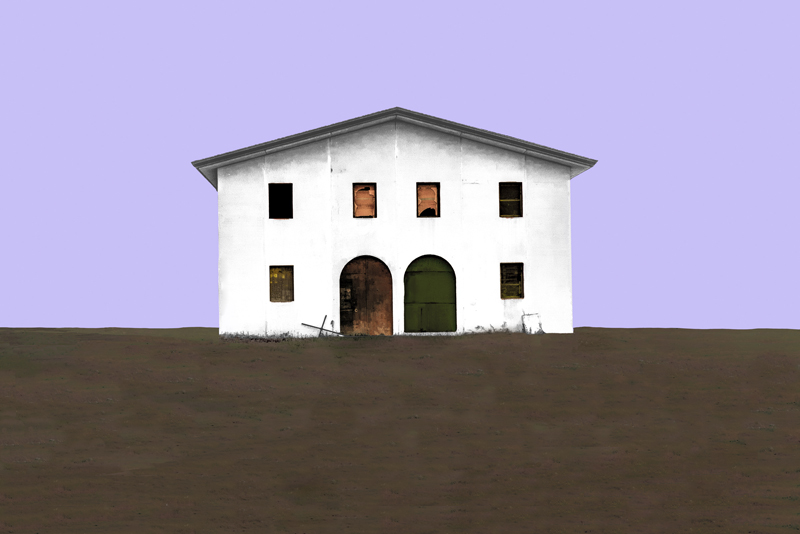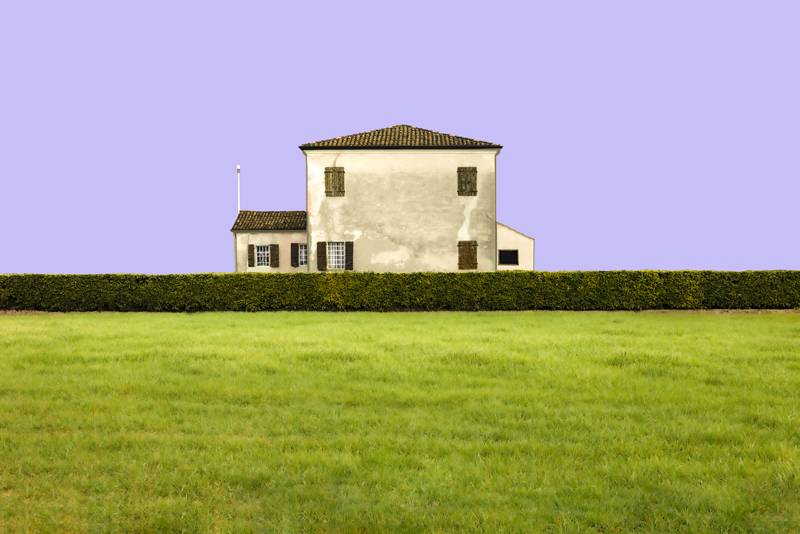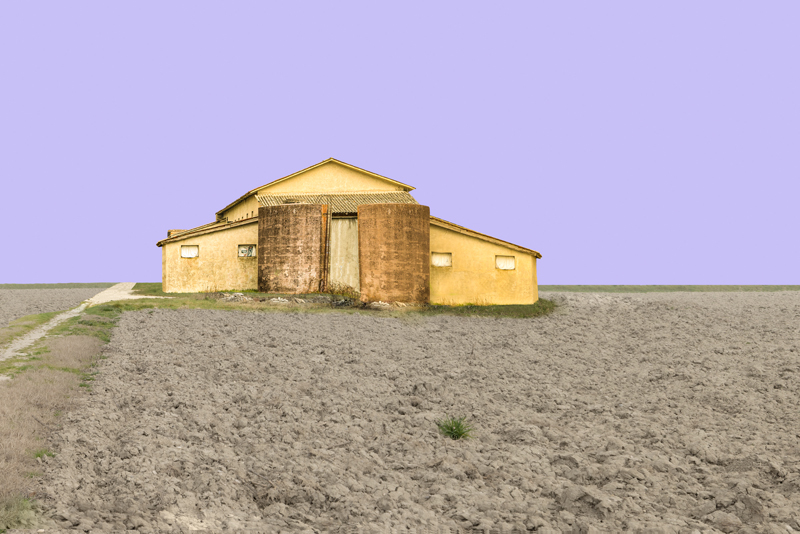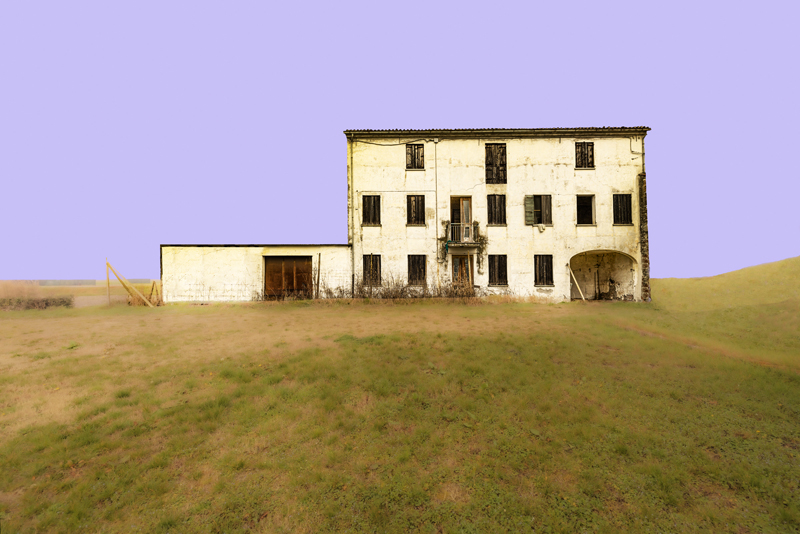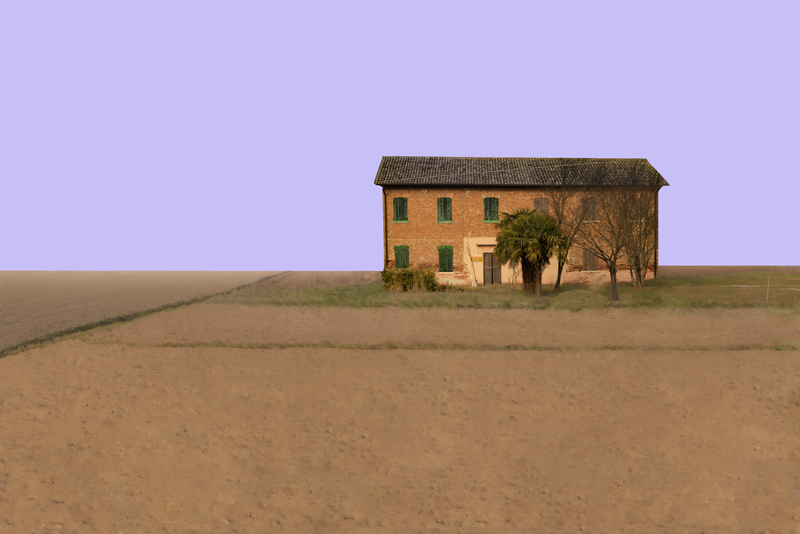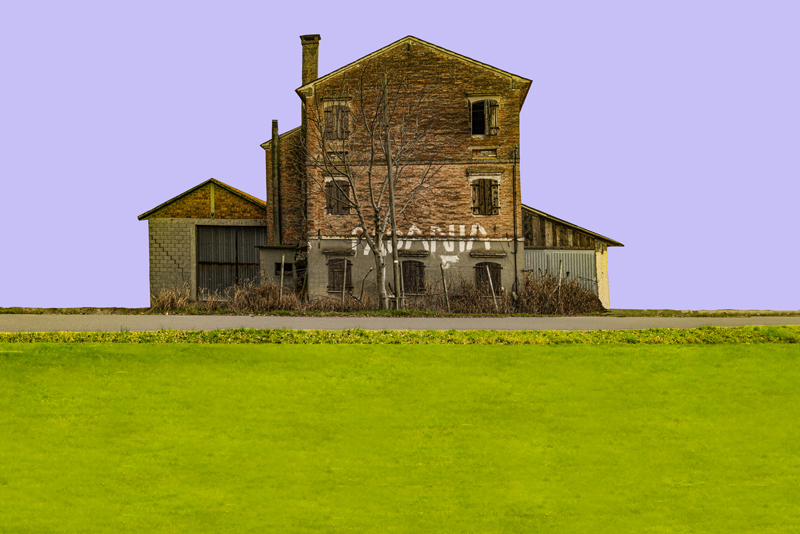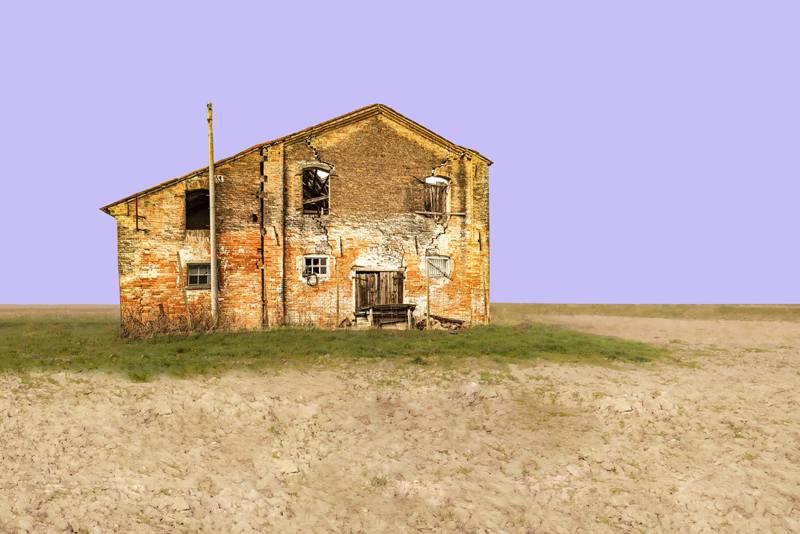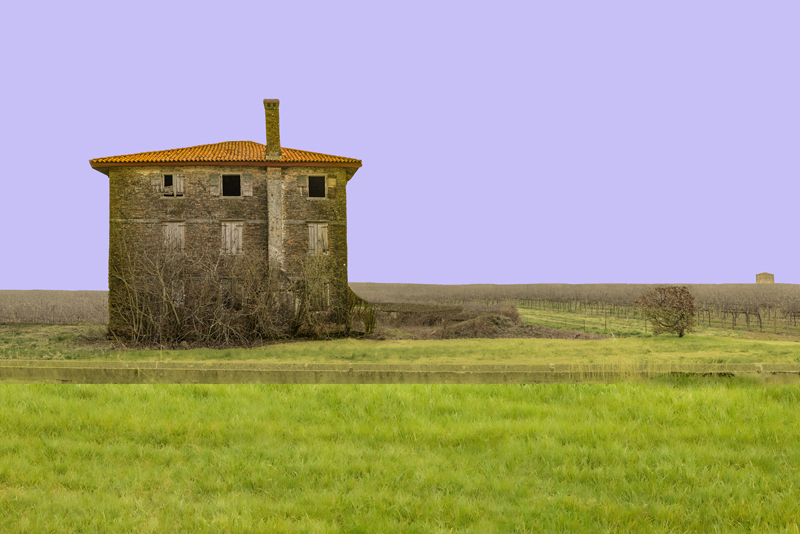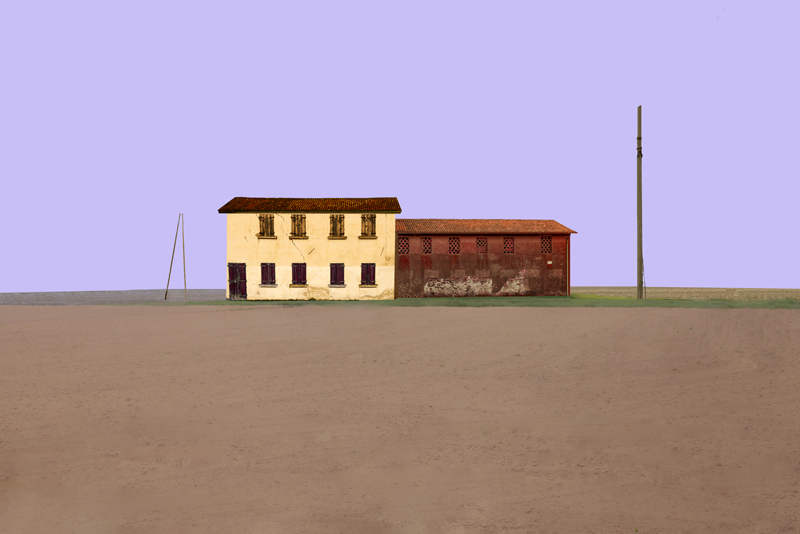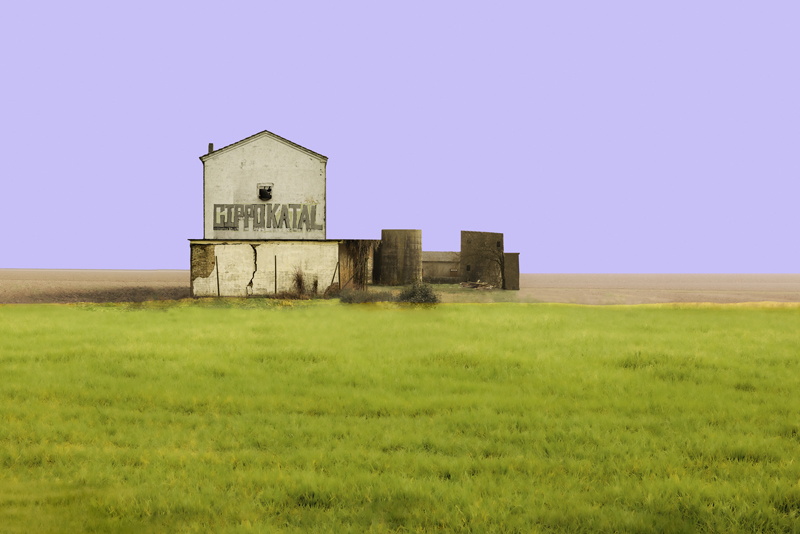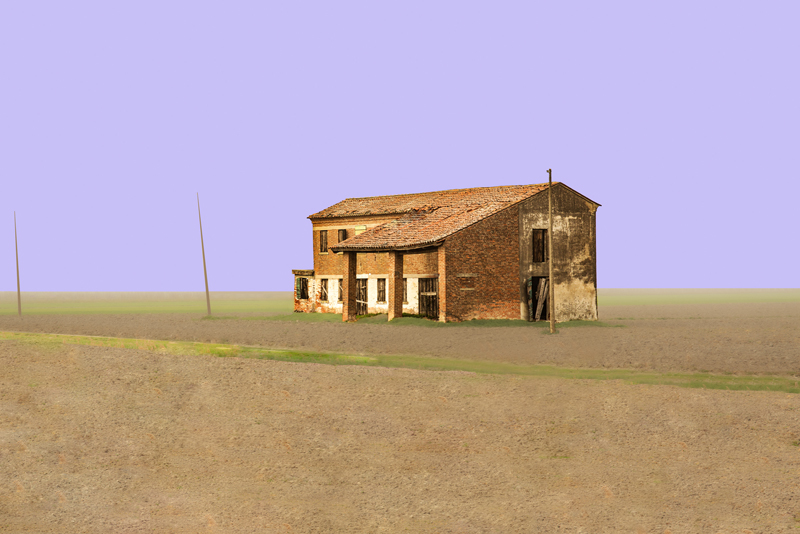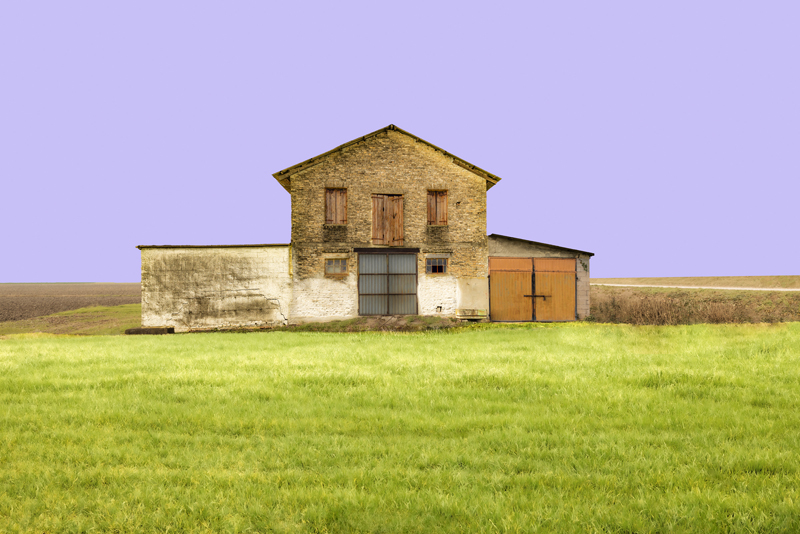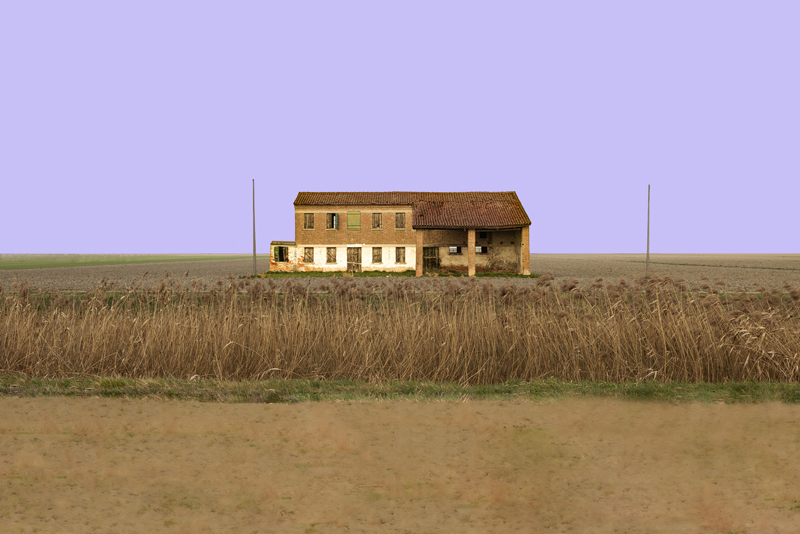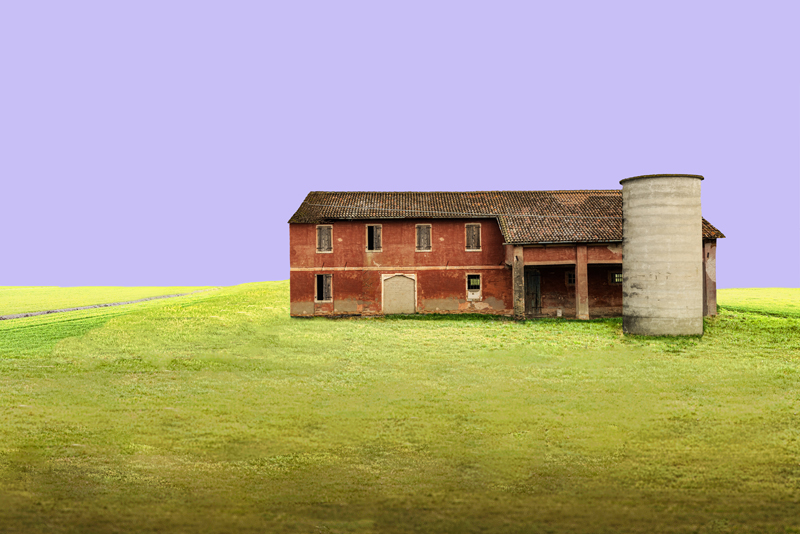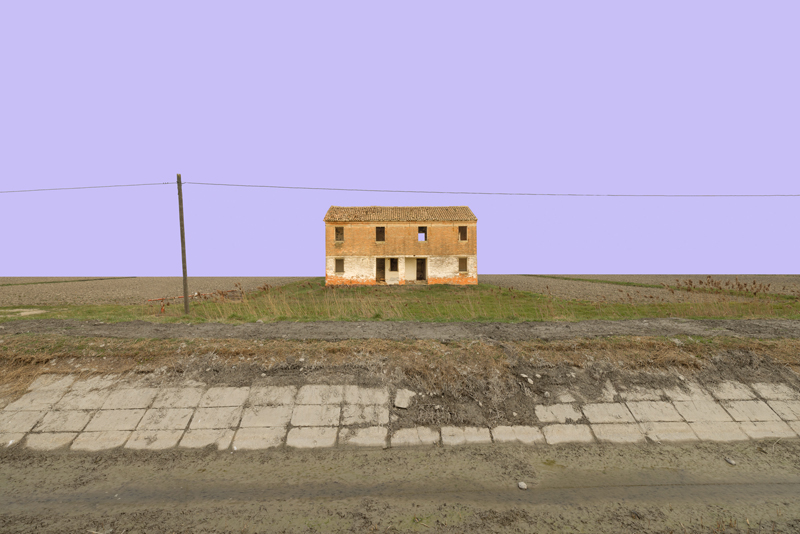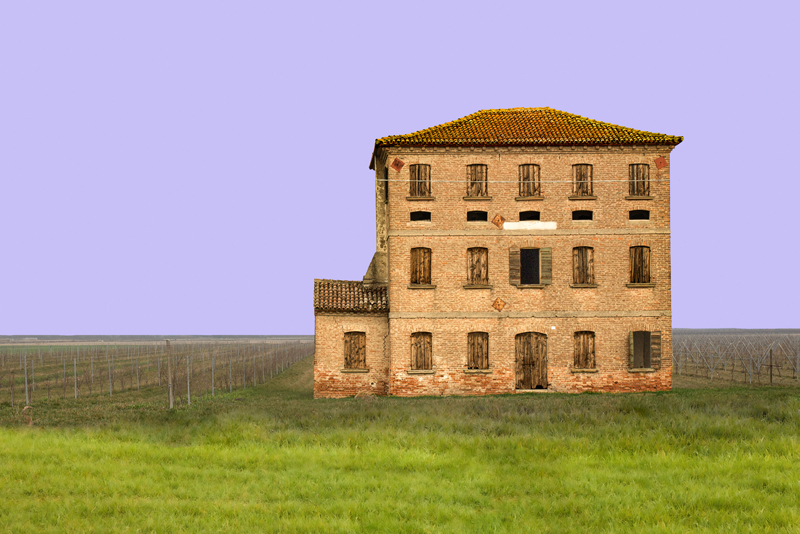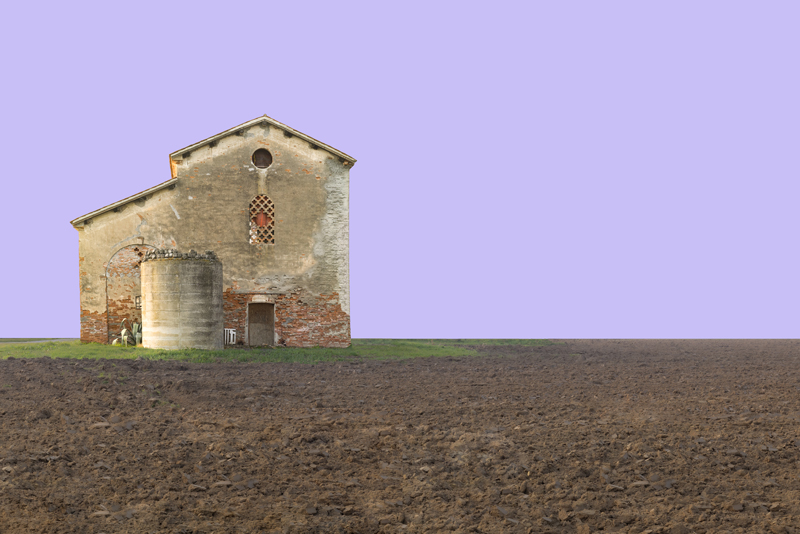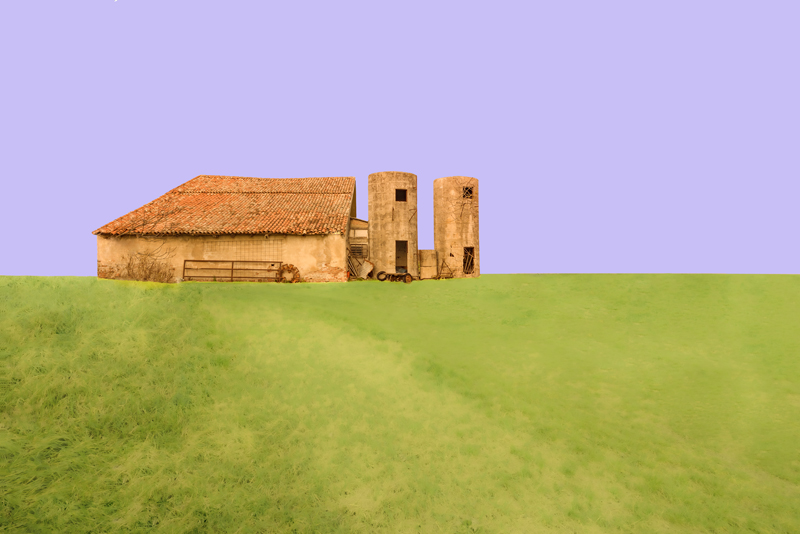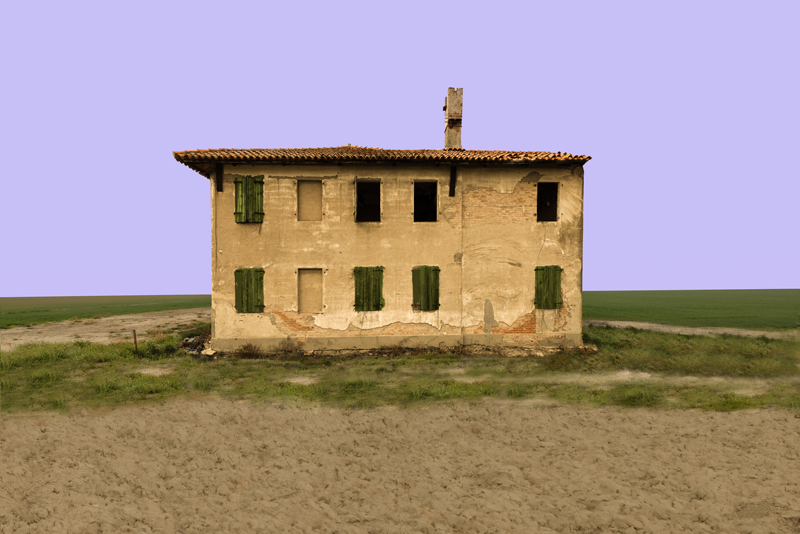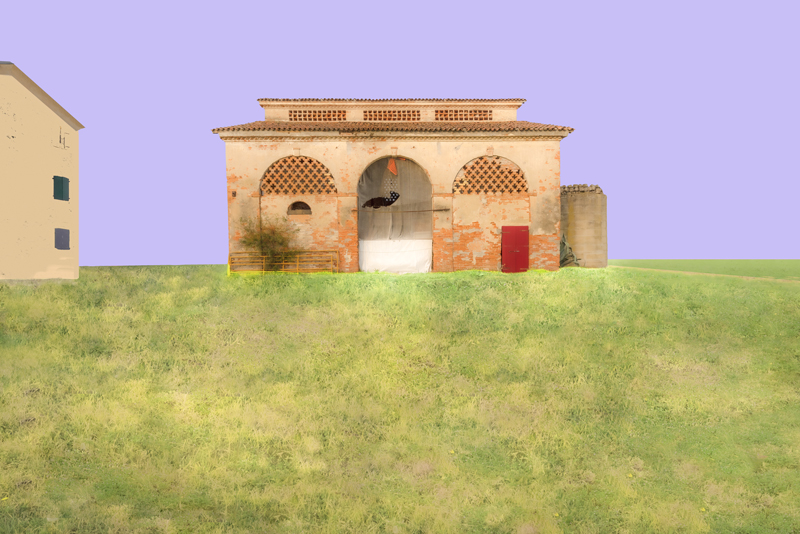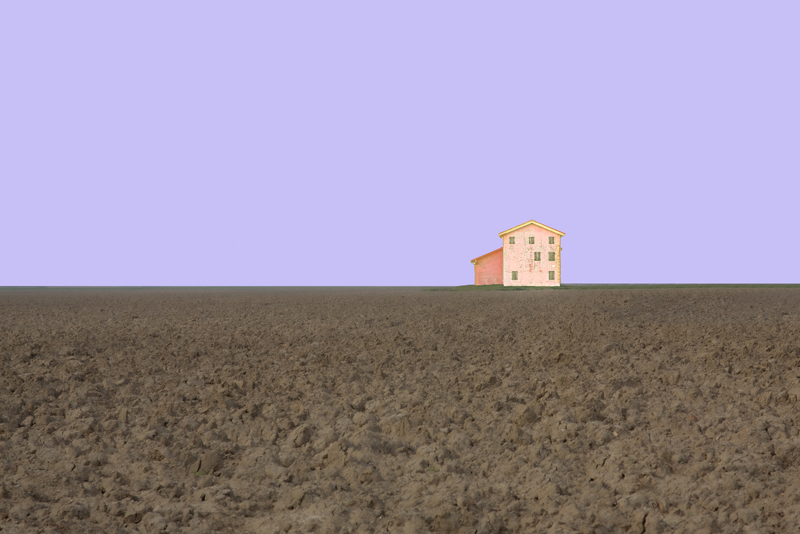
Lo sguardo di un viaggiatore, che volesse calarsi nella suggestiva atmosfera del basso Piave, verrebbe dopo non molti kilometri catturato dalla presenza discreta, nel paesaggio, di insoliti imponenti edifici integrati con inattesa materica naturalezza nelle campagne. Si tratta delle cosiddette case coloniche. Ciò finisce per creare nella sua mente, via via che in questi luoghi va inoltrandosi, giorno dopo giorno, una sorta di sensazione di appuntamento atteso. Ho vissuto questa esperienza in modo emotivamente intenso, che esulava da intenti documentali. Quel che ho cercato di raccontare, “illustrando” ed inserendo quindi una forte componente interpretativa, è una storia, una delle tante storie nascoste in queste zone di confine fra terra e acqua. Da osservatore stupito e curioso, quale io mi sono sentito in tutto questo lento percorso di scoperta, ho tentato di restituire nuova vita a questo paesaggio apparentemente “dimenticato”, utilizzando a volte anche la mia immaginazione, ma provando più spesso a coglierne la ritrosa poeticità, che ho voluto tentare di far emergere. Vite passate s’intuiscono all’interno ed intorno a questi monumenti di una realtà contadina, ormai estinta. Dinosauri di pietra marcano il territorio, quasi un monito a non scordare chi qui ha gioito, sofferto e lavorato duramente e operosamente. Ho realizzato quindi immagini che si potrebbero definire vivaci, in cui tuttavia la patina del tempo mantiene una sua discreta inconfondibile presenza.
Le motivazioni e la progettazione
Questo lavoro nasce dal mio personale desiderio di approfondire il rapporto emotivo-affettivo che mi lega da tempo al paesaggio del Veneto Orientale, più specificatamente quello del basso Piave, caratterizzato, fra l’altro, dalla presenza di un particolare tipo di architettura, quello delle cosiddette case coloniche, che ne costituiscono parte fondamentale ed integrante. La loro presenza, ad un osservatore attento, non passa inosservata, purchè si scelga di percorrere le provinciali a bassa velocità o, meglio ancora, quando ci si inoltri nella viabilità secondaria. E’ stato necessario spendere una certa quantità di tempo ed eseguire un’attenta ricerca sulle mappe prima di trasferirsi sul campo per poter poi, una volta sul posto, approcciare il soggetto con la giusta prospettiva e nelle adeguate condizioni di luce, nonché disponendo dell’attrezzatura fotografica più idonea. Altrettanto indispensabile è stato svolgere preventivamente una serie di approfondimenti del contesto storico geografico del tema in questione. Da queste premesse appare chiaro come l’intento finale non fosse quindi quello di organizzare poi il materiale che avrei acquisito con un fine documentale, operazione che l’abbondanza del materiale fotografico raccolto avrebbe anche potuto consentire, ma di trarre da esso quegli spunti emozionali, che erano lo scopo principale che mi aveva spinto ad intraprendere questo viaggio.
Il contesto storico-geografico
Le progressive bonifiche di questi territori, attuate via via con maggiore intensità ed efficacia nell’ultimo ventennio del XIX secolo e poi nella prima metà del XX secolo, crearono la possibilità di ampliare notevolmente le aree destinate all’agricoltura. I Consorzi di Bonifica qui sorti, così come accaduto in altre zone del Veneto e d’Italia, ne sono un’evidente testimonianza. La casa colonica, che si diffuse come modello costruttivo in queste zone prevalentemente fra il 1880 e il 1935, aveva la funzione di fornire un’abitazione adiacente al posto di lavoro ai braccianti che lavoravano la terra con i contratti di mezzadria. Queste strutture sorgevano generalmente abbastanza isolate in ciascuna delle numerose proprietà terriere. Tuttavia già verso la fine degli anni ’50 del ‘900 il processo di industrializzazione, lo sviluppo turistico verso il mare e la meccanizzazione delle lavorazioni agricole ridussero progressivamente il numero di braccianti necessari alle attività agricole. Nel 1964 venne definitivamente abolita in Italia la mezzadria. L’alluvione del 1966 inoltre dimostrò che il fiume non era ancora del tutto sotto controllo. Tutto ciò determinò, in tempi piuttosto rapidi, cambiamenti profondi a livello sociale e lavorativo con forte spinta all’inurbamento di una quota importante della popolazione. Pertanto queste grandi strutture vennero, da un giorno all’altro si potrebbe dire, abbandonate ed ora rimangono solo come testimonianze importanti di una precisa fase storica: la loro demolizione avrebbe un costo elevato e purtroppo quindi il loro destino, in assenza di, al momento non previsti interventi conservativi, sembra essere il lento degrado.
Nel novembre 2025 alcune di queste immagini hanno fatto parte della mostra personale
“Viaggio in Italia – My Inners Colors” presso la Galleria Forni di Bologna
Nel 2024 il lavoro è stato pubblicato su Dodho Magazine e sul numero 37 di OPENEYE
A dicembre 2024 Gold Winner ai Budapest International Photo Awards con partecipazione alla mostra a Budapest
A novembre 2024 è stato esposto a Roma Arte in Nuvola per Galleria Forni
Nel marzo 2024 è stato Silver Winner in Fine Art Architecture ai MUSE Photography Award
Nel gennaio 2024 è stato Gold Winner in Fine Art Landscape ai Tokyo International Photo Awards.
Nel 2023 è stato Silver Winner al New York Photography Awards. Sempre nel 2023 è stato pubblicato su l’Oeil de la Photographie e su The Pictorial List ed è stato presentato al Festival di Colorno 2023 (con la curatela di Paola Riccardi). Ha dato inoltre origine ad omonima monografia, sempre curata da Paola Riccardi, ed edita da Crowdbooks
They Have Gone
The gaze of a traveler wishing to immerse himself in the evocative atmosphere of the lower Piave River would, after a few kilometers, be captured by the discreet presence, in the landscape, of unusually imposing buildings integrated with unexpected natural materials into the countryside. These are the so-called farmhouses. This ends up creating in the traveler’s mind, as he gradually enters these places, day after day, a sort of sense of an awaited rendezvous. I lived this experience in an emotionally intense way, which went beyond documentary intent. What I tried to tell, by “illustrating” and therefore inserting a strong interpretative component, is a story, one of the many stories hidden in these borderlands between land and water. As the amazed and curious observer that I felt throughout this slow journey of discovery, I attempted to breathe new life into this apparently “forgotten” landscape, sometimes using my imagination, but more often trying to capture its shy poetic nature, which I wanted to bring out. Past lives can be glimpsed within and around these monuments of a now extinct rural community. Stone dinosaurs mark the landscape, almost a reminder not to forget those who rejoiced, suffered, and toiled here. I have therefore created images that could be described as lively, yet in which the patina of time retains its discreet, unmistakable presence.
Motivations and Design
This work stems from my personal desire to deepen the emotional and affective relationship that has long tied me to the landscape of Eastern Veneto, more specifically that of the lower Piave River, characterized, among other things, by the presence of a particular type of architecture, that of the so-called farmhouses, which are a fundamental and integral part of it. Their presence, to a careful observer, does not go unnoticed, provided one chooses to travel slowly along the provincial roads or, better yet, when one enters secondary roads. It was necessary to spend a certain amount of time and conduct careful map research before moving into the field so that, once there, I could approach the subject with the right perspective and in the right lighting conditions, as well as with the most suitable photographic equipment. Equally essential was a preliminary study of the historical and geographical context of the subject in question. From this background, it is clear that the ultimate goal was not to organize the material I would acquire for documentary purposes—an operation that the abundance of photographic material collected would have permitted—but to draw from it those emotional insights, which were the primary purpose that had driven me to undertake this journey.
The historical and geographical context
The progressive reclamation of these territories, carried out with increasing intensity and effectiveness in the last two decades of the 19th century and then in the first half of the 20th century, created the possibility of significantly expanding the areas dedicated to agriculture. The Land Reclamation Consortia established here, as in other areas of Veneto and Italy, are clear evidence of this. The farmhouse, which became a popular building model in these areas primarily between 1880 and 1935, served the purpose of providing a home adjacent to the workplace for laborers working the land under sharecropping contracts. These structures generally stood fairly isolated on each of the numerous landed properties. However, by the late 1950s, industrialization, the development of tourism towards the sea, and the mechanization of agricultural work progressively reduced the number of laborers required for agricultural activities. In 1964, sharecropping was definitively abolished in Italy. The 1966 flood also demonstrated that the river was not yet fully under control. All this brought about, relatively rapidly, profound social and employment changes, with a strong push towards the urbanization of a significant portion of the population. Thus, these large structures were, one might say, abandoned from one day to the next and now remain only as important testimonies to a specific historical period: their demolition would be expensive and unfortunately their fate, in the absence of currently unplanned conservation interventions, seems to be one of slow decay.
In November 2025, some of these images were included in the solo exhibition “Viaggio in Italia – My Inners Colors” at the Galleria Forni in Bologna.
In 2024, the work was published in Dodho Magazine and in numero 37 di OPENEYE.
In December 2024, it was a Gold Winner at the Budapest International Photo Awards, with participation in the exhibition in Budapest.
In November 2024, it was exhibited at Roma Arte in Nuvola for Galleria Forni.
In March 2024, it was a Silver Winner in Fine Art Architecture at the MUSE Photography Awards.
In January 2024, it was a Gold Winner in Fine Art Landscape at the Tokyo International Photo Awards.
In 2023, it was a Silver Winner at the New York Photography Awards. Also in 2023, it was published in l’Oeil de la Photographie and The Pictorial List and was presented at the 2023 Colorno Festival (curated by Paola Riccardi). It also gave rise to a monograph of the same name, also edited by Paola Riccardi, and published by Crowdbooks.